We are
We are
BOXERSHORTSSTUDIO
andwemoveyourbusinessfromonedaytodayone



ABOUT
BoxerShortsStudioisabold,cheeky360designagencythatbelievesgreatdigitalsolutionsdon’thavetowearasuitandtie.
BoxerShortsStudioisabold,cheeky360designagencythatbelievesgreatdigitalsolutionsdon’thavetowearasuitandtie.
We'replayful,alittleirreverent,andunapologeticallymemorable.Inaworldfullofstiff,genericdigitalagencies,westandoutbykeepingthingsrefreshinglyhuman—andabitcheeky.
We'replayful,alittleirreverent,andunapologeticallymemorable.Inaworldfullofstiff,genericdigitalagencies,westandoutbykeepingthingsrefreshinglyhuman—andabitcheeky.
RECENT PROJECTs


OUR
SUPERPOWERS
01
Branding & Visual Identity
Logos, color palettes, typography, and full brand worlds that feel as effortless as your favorite boxer shorts.
01
Branding & Visual Identity
Logos, color palettes, typography, and full brand worlds that feel as effortless as your favorite boxer shorts.
01
Branding & Visual Identity
Logos, color palettes, typography, and full brand worlds that feel as effortless as your favorite boxer shorts.
02
Web & Digital Experiences
Fast, beautiful, mobile-first websites and digital platforms that don’t just look good — they perform.
02
Web & Digital Experiences
Fast, beautiful, mobile-first websites and digital platforms that don’t just look good — they perform.
02
Web & Digital Experiences
Fast, beautiful, mobile-first websites and digital platforms that don’t just look good — they perform.
03
Creative Campaigns & Content
From scroll-stopping social campaigns and video storytelling to witty copy and eye-catching visuals, we do it all.
03
Creative Campaigns & Content
From scroll-stopping social campaigns and video storytelling to witty copy and eye-catching visuals, we do it all.
04
UI/UX & Product Design
Intuitive interfaces and delightful user journeys for apps, websites, and digital products.
04
UI/UX & Product Design
Intuitive interfaces and delightful user journeys for apps, websites, and digital products.
TESTIMONIALS
Don't take our word for it
These are real words from real clients who trusted us
"The rebrand didn't just update how we look; it changed how we think about who we are. The sales numbers are extraordinary, but honestly, the thing we're most proud of is that the brand finally feels like us.”

Sarah M., Bloom Cosmetics
“From strategy to final delivery, every step felt intentional. They didn't just design a website — they built us a growth engine. Couldn't recommend them more highly.”

James O., Volta Energy Co.
“Our patient portal went from something people dreaded using to something they actually enjoy. The UX thinking here is genuinely world-class.”

Dr. Priya N., Meridian Health
“They captured the soul of our brand in a way no other agency had managed to. The Fashion Week assets stopped people mid-scroll. That's all you can ask for.”

Léa F., Kove Studios
“We came in with a complex product and a tight timeline. They delivered on both without compromising quality. The onboarding flow they designed is something we're genuinely proud of.”

Kwame A., PocketLend Inc.

BLOG
Insights from our Studio
We spill the tea, share the process, and occasionally roast bad design.
We spill the tea, share the process, and occasionally roast bad design.


Marcus Adeyemi
12 Jan 2025
Why Your Brand Isn't Converting (And How to Fix It)
Most brands don't have a visibility problem. They have a clarity problem. When a potential client lands on your website and leaves without getting in touch, the instinct is to blame the traffic source, the ad spend, or the SEO. But nine times out of ten, the real issue is simpler and more uncomfortable: the brand isn't communicating clearly enough, fast enough, to the right person.
The first five seconds of any brand interaction carry an extraordinary amount of weight. In that window, a visitor is unconsciously asking three questions: Is this for me? Do I trust this? Do I know what to do next? If your brand stumbles on any one of those, the conversion is lost before it ever had a chance.
The fix rarely starts with design. It starts with positioning. Who exactly are you for? What do you do that others don't — not in a features sense, but in a values and approach sense? What does working with you feel like? These aren't marketing questions. They're existential ones. And until you answer them honestly, no amount of visual polish will compensate.
Once your positioning is clear, the design work becomes almost obvious. The right typography, the right tone, the right hierarchy on a landing page — these things flow naturally from a well-defined brand. Without that foundation, you're decorating a house built on sand.
Start with a brand audit. Read your own homepage as a stranger. Ask: what does this company actually do? Who is it for? Why should I care? If you can't answer those questions in under ten seconds, you've found your problem.
Clarity converts. Confusion doesn't.
Marcus Adeyemi
12 Jan 2025
Why Your Brand Isn't Converting (And How to Fix It)
Most brands don't have a visibility problem. They have a clarity problem. When a potential client lands on your website and leaves without getting in touch, the instinct is to blame the traffic source, the ad spend, or the SEO. But nine times out of ten, the real issue is simpler and more uncomfortable: the brand isn't communicating clearly enough, fast enough, to the right person.
The first five seconds of any brand interaction carry an extraordinary amount of weight. In that window, a visitor is unconsciously asking three questions: Is this for me? Do I trust this? Do I know what to do next? If your brand stumbles on any one of those, the conversion is lost before it ever had a chance.
The fix rarely starts with design. It starts with positioning. Who exactly are you for? What do you do that others don't — not in a features sense, but in a values and approach sense? What does working with you feel like? These aren't marketing questions. They're existential ones. And until you answer them honestly, no amount of visual polish will compensate.
Once your positioning is clear, the design work becomes almost obvious. The right typography, the right tone, the right hierarchy on a landing page — these things flow naturally from a well-defined brand. Without that foundation, you're decorating a house built on sand.
Start with a brand audit. Read your own homepage as a stranger. Ask: what does this company actually do? Who is it for? Why should I care? If you can't answer those questions in under ten seconds, you've found your problem.
Clarity converts. Confusion doesn't.

Zara Okonkwo
28 Jan 2025
The Case for Designing Slower
There is enormous pressure in the creative industry to move fast. Clients want quick turnarounds. Agencies compete on speed. Junior designers are praised for output volume. And yet, the work that lasts — the work that genuinely moves businesses forward — almost always comes from slowing down.
This isn't a romanticised argument for endless deliberation. It's a practical one. Rushing the thinking phase of a project doesn't save time. It relocates the time spent into revisions, misalignments, and rework that happens later and costs more. The hour you didn't spend getting the brief right becomes three days of corrections at the mockup stage.
Designing slower means building in time for the questions that feel inefficient but aren't. Why does this need to exist? Who is it actually for? What does success look like — not just visually, but commercially? What are we assuming that we haven't tested? These questions feel like obstacles in the moment. In retrospect, they're the reason good work lands.
It also means protecting the space for unexpected thinking. The best creative solutions rarely arrive through direct assault. They emerge sideways, during a walk, in the margin of a notebook, in the conversation that wasn't technically about the project. You can't schedule that kind of thinking, but you can create the conditions for it. A packed calendar full of back-to-back sprints doesn't leave room for the thinking that actually matters.
The agencies and designers doing the most interesting work right now are, almost without exception, the ones who have learned to say: we need a bit more time to get this right. Not as an excuse. As a commitment to quality.
Slow down to go further.
Zara Okonkwo
28 Jan 2025
The Case for Designing Slower
There is enormous pressure in the creative industry to move fast. Clients want quick turnarounds. Agencies compete on speed. Junior designers are praised for output volume. And yet, the work that lasts — the work that genuinely moves businesses forward — almost always comes from slowing down.
This isn't a romanticised argument for endless deliberation. It's a practical one. Rushing the thinking phase of a project doesn't save time. It relocates the time spent into revisions, misalignments, and rework that happens later and costs more. The hour you didn't spend getting the brief right becomes three days of corrections at the mockup stage.
Designing slower means building in time for the questions that feel inefficient but aren't. Why does this need to exist? Who is it actually for? What does success look like — not just visually, but commercially? What are we assuming that we haven't tested? These questions feel like obstacles in the moment. In retrospect, they're the reason good work lands.
It also means protecting the space for unexpected thinking. The best creative solutions rarely arrive through direct assault. They emerge sideways, during a walk, in the margin of a notebook, in the conversation that wasn't technically about the project. You can't schedule that kind of thinking, but you can create the conditions for it. A packed calendar full of back-to-back sprints doesn't leave room for the thinking that actually matters.
The agencies and designers doing the most interesting work right now are, almost without exception, the ones who have learned to say: we need a bit more time to get this right. Not as an excuse. As a commitment to quality.
Slow down to go further.

Priya Menon
10 Feb 2025
What African Design Aesthetics Are Teaching the Global Creative Industry
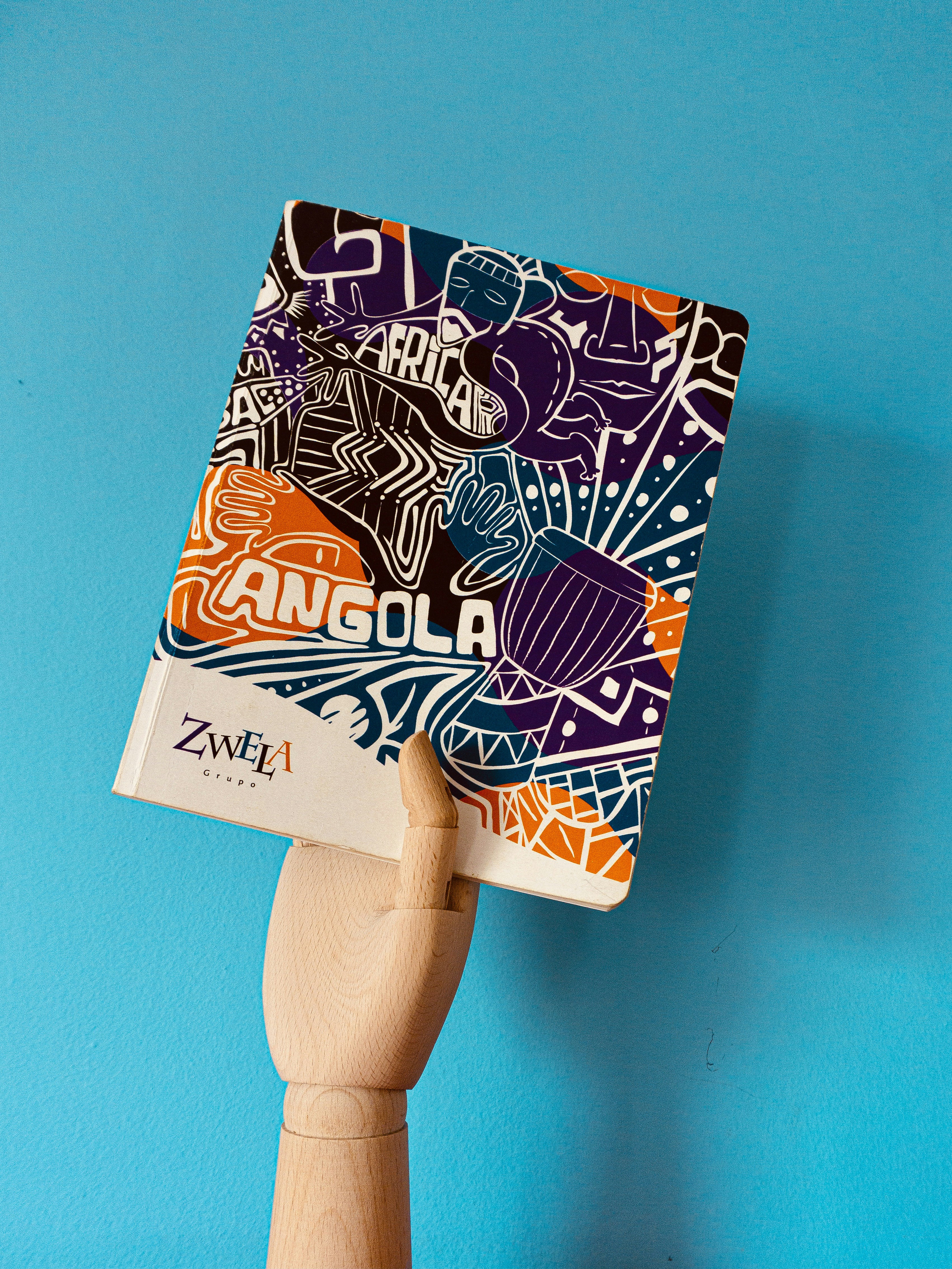
For too long, African visual culture was treated as an influence to be borrowed rather than a tradition to be understood. Pattern lifted without context. Colour used without meaning. Craft celebrated without credit. The global design industry is finally beginning to reckon with that history — and what's emerging on the other side is genuinely exciting.
African design aesthetics are not monolithic. The continent contains 54 countries, thousands of ethnic groups, and visual traditions of extraordinary range and depth. Kente weaving from Ghana carries entirely different symbolism to the geometric beadwork of the Ndebele people in South Africa, which is visually distinct again from the Adinkra symbols of the Akan or the intricate metalwork of Benin. Treating these traditions as interchangeable is itself a form of erasure.
What these aesthetics share — and what makes them so generative for contemporary design — is a relationship between visual form and meaning that Western modernism largely abandoned. Pattern is not decoration. It is communication. Colour carries cultural weight. Proportion has spiritual significance. When you understand design as a meaning-making practice rather than a purely visual one, the work gets richer and more resonant.
We are seeing a generation of African designers — on the continent and in the diaspora — who are doing the hard work of understanding and translating these traditions with fluency and respect. Their work is influencing brand design, typography, digital interfaces, and motion in ways that are only beginning to be recognised globally.
The conversation happening in Lagos, Accra, Nairobi, and Cape Town right now is not derivative. It is originating. The global design industry would do well to listen.
Priya Menon
10 Feb 2025
What African Design Aesthetics Are Teaching the Global Creative Industry
For too long, African visual culture was treated as an influence to be borrowed rather than a tradition to be understood. Pattern lifted without context. Colour used without meaning. Craft celebrated without credit. The global design industry is finally beginning to reckon with that history — and what's emerging on the other side is genuinely exciting.
African design aesthetics are not monolithic. The continent contains 54 countries, thousands of ethnic groups, and visual traditions of extraordinary range and depth. Kente weaving from Ghana carries entirely different symbolism to the geometric beadwork of the Ndebele people in South Africa, which is visually distinct again from the Adinkra symbols of the Akan or the intricate metalwork of Benin. Treating these traditions as interchangeable is itself a form of erasure.
What these aesthetics share — and what makes them so generative for contemporary design — is a relationship between visual form and meaning that Western modernism largely abandoned. Pattern is not decoration. It is communication. Colour carries cultural weight. Proportion has spiritual significance. When you understand design as a meaning-making practice rather than a purely visual one, the work gets richer and more resonant.
We are seeing a generation of African designers — on the continent and in the diaspora — who are doing the hard work of understanding and translating these traditions with fluency and respect. Their work is influencing brand design, typography, digital interfaces, and motion in ways that are only beginning to be recognised globally.
The conversation happening in Lagos, Accra, Nairobi, and Cape Town right now is not derivative. It is originating. The global design industry would do well to listen.